
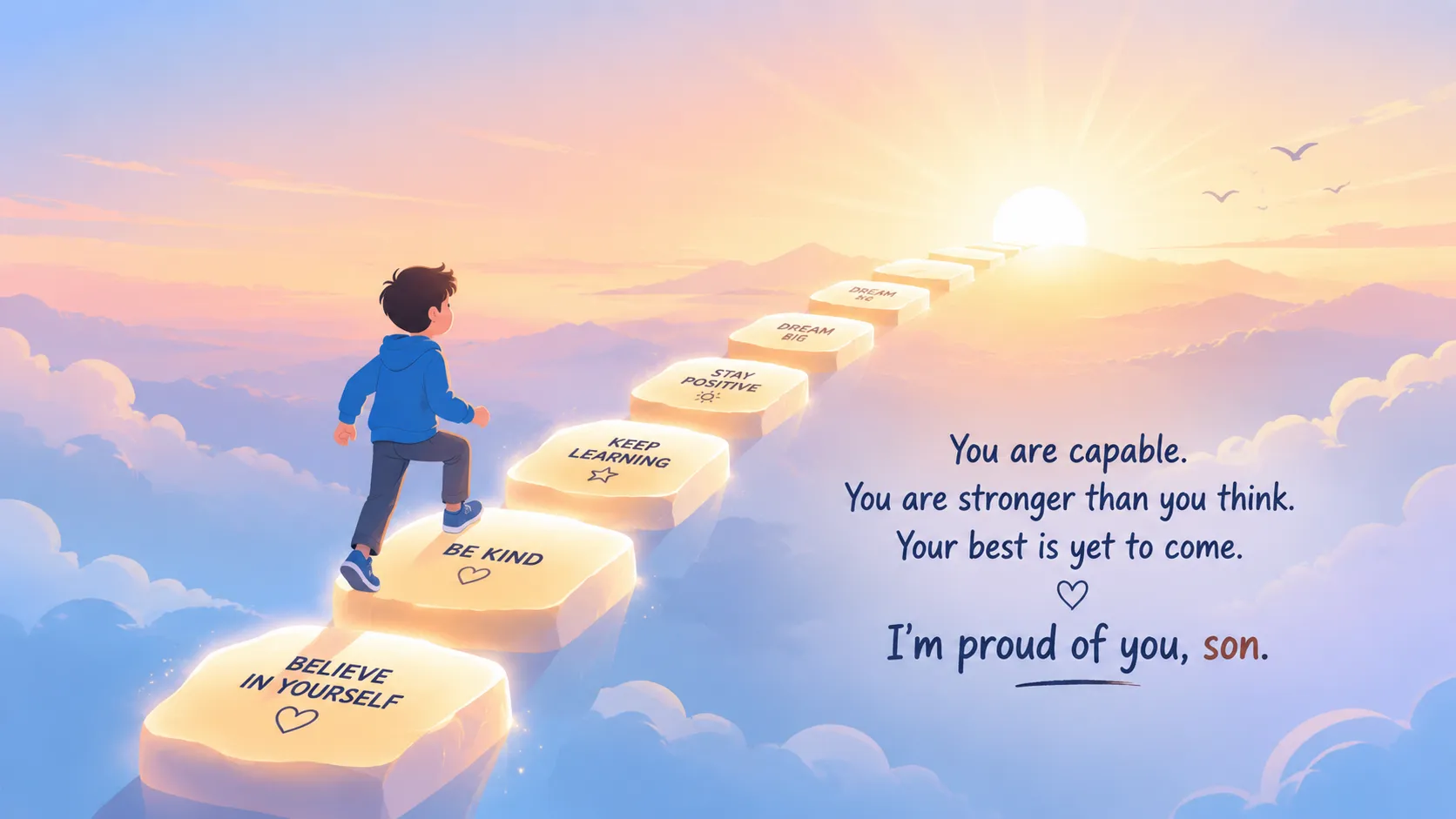
Parents often underestimate the power of a few sincere words. A son may act tough, independent, or emotionally reserved, but encouragement from his parents can shape his confidence for years. Research published in psychological and parenting studies continues to show that emotionally supportive parenting improves emotional regulation, resilience, and social well-being in children and teenagers.
Why Encouraging Words Matter in a Son’s Life
Every son carries invisible battles. Some struggle with confidence, others wrestle with fear, pressure, loneliness, or uncertainty about who they are becoming. Parents sometimes think providing food, education, and discipline is enough, but emotional support is equally important. A son who regularly hears positive and affirming words develops a stronger emotional foundation. He becomes more willing to take risks, recover from failure, and believe in his own value. Encouragement acts like sunlight for emotional growth. Without it, even talented children can shrink emotionally.
Modern research supports this idea strongly. Studies on emotional parenting have found that supportive parental communication improves emotional adjustment, self-regulation, and psychological well-being in children and adolescents. When boys grow up hearing only criticism or silence, they often learn to suppress emotions rather than understand them. Encouraging words help sons feel emotionally safe. That safety creates trust, and trust creates openness. A son who trusts his parents is more likely to share struggles before those struggles become destructive.
Think about how a tree grows. Water alone is not enough. It also needs sunlight, healthy soil, and protection from storms. Sons are no different. Discipline provides structure, but encouragement provides warmth. Boys remember words longer than parents realize. A single statement like “I believe in you” can echo in a son’s mind for decades, especially during difficult moments. The truth is simple: encouraging words are not weakness. They are emotional fuel.
The Emotional Impact of Positive Parenting
Positive parenting does not mean avoiding correction or pretending everything is perfect. It means balancing guidance with emotional support. Boys who constantly hear negative language often build identities around failure. On the other hand, sons who hear encouragement begin to see themselves as capable and resilient individuals. Studies on parental emotional coaching show that supportive responses from parents improve emotional development and social competence.
One fascinating recent study involving fathers and sons even found that humor and emotionally open conversations strengthened family bonds and improved communication. This matters because many boys are raised with the harmful belief that vulnerability equals weakness. Encouraging language breaks that cycle. It teaches sons that strength includes honesty, empathy, and emotional awareness.
Parents should understand that encouragement is not about creating arrogance. It is about creating security. Secure boys become emotionally healthier men. They learn that failure does not define them and that mistakes are opportunities to grow rather than evidence of worthlessness. That mindset becomes priceless later in life when relationships, careers, and responsibilities become more complicated.
Inspirational Words of Encouragement for Son
Sometimes a son does not need a long lecture. He simply needs a few powerful words that remind him of his potential. Inspirational encouragement helps boys push through difficult situations while reminding them they are capable of more than they realize. These words become mental armor during stressful moments. Whether your son is struggling in school, facing rejection, or battling self-doubt, your voice can become the anchor that steadies him.
Here are some inspirational words of encouragement for son that can make a real emotional impact:
| Situation | Encouraging Words |
|---|---|
| During failure | “Failure is not the end. It is proof that you are trying.” |
| During stress | “You are stronger than this moment.” |
| During self-doubt | “Never underestimate what you are capable of becoming.” |
| During challenges | “Hard seasons create strong men.” |
| During uncertainty | “You do not need all the answers today to move forward.” |

Inspirational encouragement works best when it sounds sincere rather than rehearsed. Sons can detect fake positivity immediately. Speak naturally. Speak honestly. Tell your son why you believe in him. Explain the strengths you genuinely see in his character. Maybe he is kind under pressure, hardworking despite setbacks, or brave enough to keep going when others quit. Those observations matter deeply.
Parents should also remember that encouragement is often most powerful during failure, not success. It is easy to praise a son after a victory. Real emotional support appears after disappointment. When a boy learns that love and encouragement remain steady during hard moments, he develops resilience instead of fear. That emotional stability shapes adulthood more than trophies ever will.
Motivational Messages for Success
Success is rarely a straight road. Sons need reminders that progress matters more than perfection. Motivation rooted only in achievement can become dangerous because boys may feel valuable only when they win. Healthy encouragement focuses on effort, growth, discipline, and character rather than constant performance.
A few motivational messages can completely shift a son’s mindset:
- Your effort matters even when results take time.
- Character will take you further than talent alone.
- The strongest people are the ones who keep going quietly.
- Every successful man was once inexperienced.
- You are becoming stronger through this process.

Encouragement should feel like a compass, not a whip. Too many boys grow up feeling pressured instead of supported. Pressure creates anxiety. Encouragement creates confidence. There is a major difference between saying, “You better succeed,” and saying, “I know you can handle challenges.” One creates fear. The other creates strength.
Heart-Touching Words of Encouragement for Son
Heart-touching encouragement reaches deeper than motivation. It speaks directly to emotional connection and love. Sons may not always express emotions openly, but they still crave reassurance. A heartfelt message can heal insecurity that has existed silently for years. Many grown men still remember encouraging words their parents said decades earlier because emotional memories last.
Here are some heart-touching words of encouragement for son:
“No matter how old you become, you will always have a safe place in my heart.”
“I am proud of the man you are becoming, not just your achievements.”
“You never have to earn my love. You already have it.”
“Your kindness is one of your greatest strengths.”
“Even on your hardest days, you are never alone.”
These kinds of messages matter because boys often receive love conditionally. Society praises them for performance, toughness, and success, but rarely teaches them emotional worth beyond achievement. Parents can change that narrative at home. A son who feels emotionally accepted becomes more emotionally stable.
Research consistently links supportive parenting with healthier emotional adjustment and lower internalized stress in children and adolescents. Emotional warmth is not a luxury in parenting. It is essential. Sons who grow up emotionally supported are often better equipped to form healthy relationships later in life.
Emotional Messages That Build Connection
Strong parent-son relationships are built through consistent emotional communication. Encouragement should not appear only during dramatic moments. The strongest bonds develop through small, repeated affirmations over time. A simple message before school, after practice, or during dinner can shape emotional security more than one grand speech.
Parents sometimes worry that emotional conversations will make boys “soft.” Reality shows the opposite. Emotionally supported boys are often more resilient because they feel safe processing emotions rather than suppressing them. Emotional suppression does not create strength. It creates emotional distance and unresolved stress.
Short Words of Encouragement for Son
Not every encouraging message needs to be long. Short encouragement can be surprisingly powerful because it is easy to remember during stressful moments. Simple words often stick in the mind longer than lengthy speeches.
Here are some short words of encouragement for son:
- I believe in you.
- Keep going.
- You are enough.
- I am proud of you.
- You can handle this.
- Stay strong.
- Never give up.
- Your future is bright.
- You matter.
- Be brave.

Short encouragement works because it becomes repeatable. Sons can mentally replay these phrases during exams, interviews, heartbreak, or difficult seasons. Think of these words as emotional tools placed in your son’s pocket before he faces the world.
Powerful One-Line Encouragements
Sometimes one sentence can completely shift perspective. Here are a few powerful examples:
- Your mistakes do not cancel your value.
- Real strength is continuing after disappointment.
- The world needs the gifts only you can offer.
- Confidence grows through action, not perfection.
- You are growing even when progress feels invisible.
These statements become emotional anchors during uncertainty. A son who remembers encouraging words often handles adversity differently because he carries emotional reinforcement into difficult moments.
Deep Words of Encouragement for Son
Deep encouragement focuses less on temporary success and more on identity, purpose, and character. These words stay with a son long after childhood ends. They help shape the kind of man he becomes internally, not just externally.
Here are some deep words of encouragement for son:
“Your value is not measured by success, money, or approval from others.”
“A good man is defined by integrity when nobody is watching.”
“Pain can either harden your heart or strengthen your wisdom.”
“The strongest men know how to stay kind in a cruel world.”
“Never trade your character for temporary acceptance.”
Deep encouragement matters because boys eventually face identity crises. They begin asking hard questions: Who am I? What kind of man do I want to become? Am I enough? Parents cannot answer those questions forever, but they can plant truths early that guide sons later.
Teaching Strength, Integrity, and Courage
Courage is not the absence of fear. It is movement despite fear. Sons need encouragement that teaches emotional courage, moral courage, and personal responsibility. Encouragement should challenge boys to grow while reminding them they are loved regardless of outcomes.
A father or mother who says, “Own your mistakes and keep moving forward,” teaches accountability without shame. A parent who says, “Kindness is strength,” teaches emotional maturity in a world obsessed with aggression. These lessons become part of a son’s internal voice over time.
Encouraging Words for Young Son
Young boys are constantly learning how the world works. Their confidence is fragile, even when they appear energetic and fearless. Encouraging words during childhood build the emotional framework that influences future self-esteem.
Here are some encouraging words for young son:
- You are learning every day.
- It is okay to make mistakes.
- I love how hard you tried.
- You are brave.
- You have a good heart.
Children absorb language like sponges absorb water. Repeated encouragement becomes internal belief. When parents encourage effort rather than perfection, children develop healthier confidence. They become less afraid of failure because they understand growth takes time.
Research on emotional parenting repeatedly shows that emotionally supportive communication improves emotional competence and adjustment in children. Young sons especially need reassurance because childhood experiences heavily influence adult self-perception.
Helping Young Boys Handle Fear and Failure
Fear is part of childhood. Boys fear rejection, embarrassment, punishment, and disappointment. Parents who respond only with criticism accidentally teach boys to hide struggles rather than overcome them. Encouragement teaches emotional resilience instead.
Instead of saying, “Stop crying,” parents can say, “I know this feels hard, but you can get through it.” That small difference matters enormously. One response dismisses emotion. The other teaches coping skills.
Encouraging Words for Teenage Son
Teenage years can feel like emotional turbulence. Hormones, social pressure, identity struggles, academic stress, and uncertainty collide all at once. Teenage boys often pretend they do not care what parents think while secretly caring deeply.
Here are some encouraging words for teenage son:
- You do not have to become someone else to be accepted.
- Your worth is bigger than grades or popularity.
- I trust your ability to grow from mistakes.
- You are becoming stronger every day.
- I am here even when life feels confusing.

Teenagers need guidance without constant judgment. Encouragement during adolescence helps boys maintain emotional connection with parents instead of emotionally withdrawing. Research on parental support and adolescent emotional adjustment continues to show strong links between supportive parenting and healthier mental well-being.
Motivating Teenage Sons Without Criticism
Teenage boys already face enormous pressure from school, social media, peers, and expectations about masculinity. Constant criticism often pushes them further away emotionally. Encouragement does not mean lowering standards. It means delivering guidance with respect and emotional intelligence.
A teenager who hears, “I know you can do better because I see your potential,” responds differently than one who hears, “You are lazy.” One message motivates growth. The other attacks identity. Parents should criticize behavior when necessary without destroying confidence.
Words of Encouragement for Son From Mom
A mother’s words carry unique emotional weight. Many sons receive their earliest emotional understanding from their mothers. Encouragement from a mother often shapes how a boy sees love, emotional safety, and self-worth.
Here are some words of encouragement for son from mom:
“You will always be one of the greatest blessings in my life.”
“I admire your heart more than your accomplishments.”
“No matter what happens, I will always believe in you.”
“You make this world brighter just by being yourself.”
“Watching you grow has been one of my life’s greatest joys.”
Studies on maternal emotional coaching show that emotionally supportive maternal communication strengthens emotional regulation in children. Mothers often provide emotional reassurance that becomes foundational for future emotional stability.
A Mother’s Emotional Influence
Mothers often notice emotional shifts before anyone else. Their encouragement can calm anxiety, reduce self-doubt, and strengthen emotional resilience. A mother who regularly reminds her son he is loved without conditions helps build long-term emotional confidence.
Boys may not always verbalize appreciation, especially during adolescence, but encouraging maternal words often remain deeply rooted emotionally for decades.
Words of Encouragement for Son From Dad
Fathers also play a powerful role in emotional development. Research increasingly shows that emotional warmth and involvement from fathers significantly influence emotional health and future relationships. Boys need emotionally present fathers, not emotionally distant providers.
Here are some words of encouragement for son from dad:
“I respect the man you are becoming.”
“Strength is not about pretending you never hurt.”
“I trust your ability to make wise decisions.”
“You can always come to me, no matter what.”
“Keep your integrity even when it costs you something.”
Encouragement from fathers often shapes masculine identity. Sons watch how fathers handle stress, relationships, conflict, and emotion. A father’s words can either reinforce emotional suppression or encourage healthy emotional strength.
A Father’s Role in Emotional Strength
Recent research even highlights that humor, openness, and emotional connection strengthen father-son relationships significantly. Fathers do not need to become perfect speakers overnight. Consistency matters more than perfection. Small moments of emotional encouragement build trust over time.
Many men today grew up hearing little emotional encouragement from their own fathers. Breaking that cycle matters. Sons need fathers who teach responsibility without emotional distance. They need correction balanced with warmth. That combination builds grounded, emotionally resilient men.
Conclusion
Words shape identity. They influence confidence, emotional resilience, relationships, and self-worth. A son may forget many childhood details, but he rarely forgets how his parents made him feel. Encouraging words become emotional anchors during difficult seasons of life. They remind boys they are valued beyond achievements, mistakes, or temporary struggles.
Whether your son is young, growing through teenage challenges, or already becoming a man, your encouragement still matters. Speak life into him consistently. Tell him when you are proud. Remind him he is capable. Help him understand that real strength includes integrity, compassion, resilience, and emotional honesty.
The world will criticize him enough. Home should be the place where encouragement helps him rise again.

FAQs
1. Why are encouraging words important for sons?
Encouraging words help sons build confidence, emotional resilience, and healthy self-esteem. Positive parental communication also improves emotional regulation and psychological well-being according to modern parenting research.
2. What are some short encouraging words for a son?
Simple phrases like “I believe in you,” “Keep going,” “You are enough,” and “I am proud of you” can have a lasting emotional impact.
3. How can parents encourage teenage sons effectively?
Parents should focus on guidance without constant criticism. Teenagers respond better to supportive communication that respects their emotions and independence.
4. What should fathers say to encourage their sons?
Fathers can encourage sons by affirming character, resilience, honesty, and emotional strength. Statements like “I trust you” or “I respect the man you are becoming” are powerful.
5. Can encouraging words really affect a child’s future?
Yes. Research consistently shows that emotionally supportive parenting influences emotional health, confidence, relationships, and long-term psychological adjustment.

Max David is a British content writer and creative strategist known for crafting messages, wishes, and celebration-themed articles. His writing blends clarity with emotion, helping readers connect, share, and celebrate life’s special moments. With a keen eye for storytelling and audience needs, Max brings a modern voice to every piece he creates.